
Lower back pain is often overlooked in its early stages. It may begin as mild stiffness after prolonged sitting or a dull ache that appears occasionally. However, in some cases, the discomfort can gradually extend down the leg, becoming sharper and more persistent, especially during routine activities such as walking, sitting, or even sleeping.
Most people try to manage it on their own in the beginning, a painkiller, some rest, maybe a few stretches. This may help temporarily, but when the underlying cause is not treated, the relief usually does not last.
The pain returns, and often feels worse than before. This is how sciatica typically develops, subtle at first, then increasingly noticeable over time. Even clinical observations indicate that nearly 40% of individuals experience sciatica at some point in their lives.
Paying attention to the problem early makes a significant difference. When the root cause is identified and treated in time, the condition becomes much easier to manage.
What is Sciatica?
Sciatica is a symptom indicating an underlying issue in your lower back. The sciatic nerve originates in the lumbar spine and runs all the way down through the hips, buttocks, and down each leg.
When this nerve becomes irritated or compressed, symptoms begin to appear. Some people experience a sharp shooting pain, while others report burning, sensations, tingling, or even numbness
Unlike general back pain, sciatica behaves differently. Prolonged sitting, sudden movements, or even a small action like coughing can worsen the pain. That is because the problem is often deeper, such as a disc issue or spinal narrowing, not just a simple strain.
For example, someone with a desk job may ignore the early signs. It starts small, just a bit of discomfort in the lower back. The pain begins to travel down one leg, making long meetings or daily travel uncomfortable.
If ignored for too long, it can start interfering with daily life. This is usually the point where people realise it’s not “just back pain” anymore and look for professional help from a pain management center.
Identifying the Types and Causes of Sciatica
Sciatica can vary in both duration and underlying cause, which is why accurate diagnosis is essential for effective treatment and recovery. Clinically, it is commonly classified into the following categories:
- Acute Sciatica: Often triggered by sudden movement, such as heavy, improper lifting or twisting awkwardly. The pain can be intense initially, but in many cases it settles down over time.
- Chronic Sciatica: It lasts over 3 months and requires advanced medical interventions.
Common culprits include:
| Cause | Description | Risk Factors |
|---|---|---|
| Herniated Disc | A soft disc material bulges, pressing the nerve root. | Age 30-50, manual labour, obesity. |
| Spinal Stenosis | A narrowed spinal canal squeezes nerves. | Older adults (over 60), arthritis. |
| Degenerative Disc Disease | Worn discs lead to bone spurs and inflammation. | Ageing, repetitive stress, and poor posture. |
| Piriformis Syndrome | A tight piriformis muscle irritates the nerve. | Runners, prolonged sitting. |
| Spondylolisthesis | One vertebra slips over another. | Trauma, genetics. |
Lifestyle factors such as sedentary work, poor ergonomics, or excess weight can increase the risks. In India, rising desk-bound work and urban lifestyle have contributed to higher incidence rates.
Read Also - Non-Surgical Ways to Get Relief From Chronic Back Pain
The Role of Epidural Steroid Injections (ESI) in Sciatica Treatment
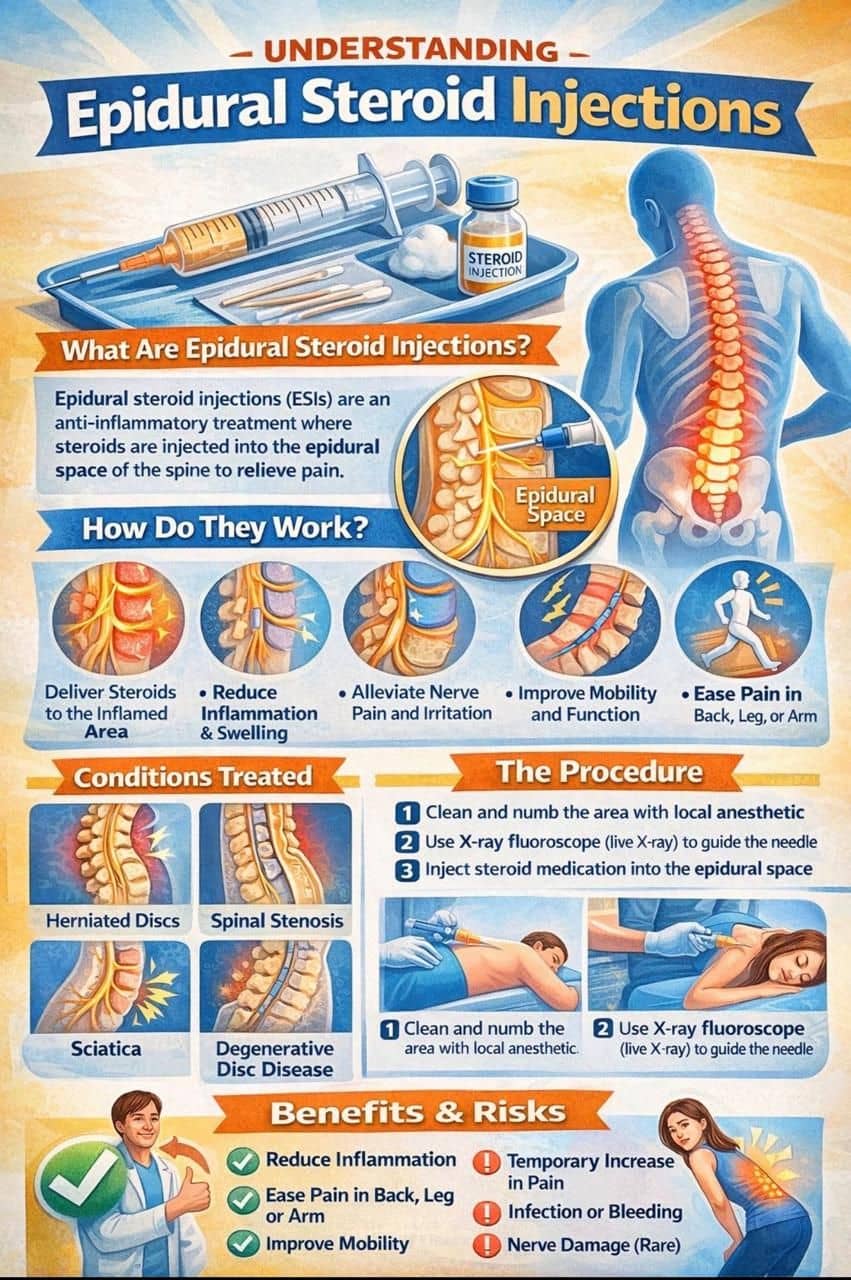
When rest, medications, and physiotherapy fail to provide adequate relief, more targeted interventions become necessary. One of the most effective non-surgical treatments offered at a center for pain management is the Epidural Steroid Injection (ESI).
How Epidural Steroid Injections Work
Sciatica pain is primarily caused by inflammation and pressure on the sciatic nerve. ESI delivers corticosteroid medication directly into the epidural space and the area surrounding the spinal nerves.
- The steroid acts as a powerful anti-inflammatory agent, reducing swelling around the compressed nerve
- It blocks pain signals and decreases chemical irritation
- This allows the nerve to recover and function more normally
Unlike oral medications, this targeted approach ensures the treatment reaches the exact source of the problem, making it especially effective for conditions such as herniated discs or spinal stenosis.
The Procedure: What to Expect
The ESI procedure is minimally invasive and typically completed within a short time at a specialised center for pain management.
- The patient lies in a comfortable position(typically face down)
- A local anaesthetic is used to numb the injection site
- Using fluoroscopic (live X-ray) guidance, the doctor precisely positions the needle
- The steroid is then injected near the affected nerve
The use of imaging ensures high accuracy, which is critical for effective pain relief and safety. Most patients can return home the same day and resume light activities within 24 hours.
Effectiveness and Recovery Outcomes
Patient outcomes show that individuals experience significant pain relief after ESI. Many patients notice improvement within 2 to 7 days, with relief lasting several weeks to months.
Compared to surgical options, ESI offers several advantages:
- No incisions or stitches
- Minimal downtime
- Lower risk of complications (infection rates below 1%)
- Quick return to daily activities
This makes it a practical option for patients seeking effective relief without undergoing surgery.
Summing Up
Sciatica is a progressive condition that can significantly affect your mobility, productivity, and overall quality of life if left untreated. The key to effective recovery lies in early diagnosis, targeted treatment, and a structured approach to long-term care.
Advanced treatments like Epidural Steroid Injections, combined with guided rehabilitation and lifestyle adjustments, offer a highly effective path to relief. If you are experiencing ongoing leg pain, numbness, or discomfort that does not improve with basic care, it is time to take the next step with Denovo Spine & Pain Management Center. Don’t wait for the condition to worsen.
Book your appointment today and take the first step toward a pain-free, active life.
Read Also - PCOD vs PCOS Explained
Frequently Asked Questions (FAQs)
1. How soon will the sciatica pain become manageable after the epidural steroid injection?
Most patients experience some reduction of pain between 2 to 7 days following the injection process. Inflammation of the nerves is gradually reduced, and the patient feels more comfortable.
2. Does the epidural steroid injection hurt?
No, the injection point is anaesthetised to prevent any pain while the injection takes place.
3. What is the duration of relief achieved through the procedure?
Pain relief usually lasts anywhere between several weeks and several months.
4. Do epidural steroid injections carry any risks?
This procedure is a risk-free technique, and minor side effects include muscle spasms in less than 1%.